
Big Cat Safaris in Tanzania: Travel That Helps Protect Them
Big Cat Safaris in Tanzania: Travel That Helps Protect Them
Lions, leopards and cheetahs are the animals most visitors hope to see in Tanzania. To us they are also something more: a measure of how healthy a wild place is. A big cat needs space, plenty of prey and neighbours who can live alongside it. Where those three things hold, the whole ecosystem tends to hold with them. This guide explains where Tanzania’s big cats live, what threatens them, and how to plan a big cat safari that helps protect them rather than only watching them.
Tanzania’s big cats and where they live
Tanzania is thought to hold more lions than any other country, and its parks protect some of Africa’s most important populations of all three big cats.
- Lions live in prides and are found across the Serengeti, the Ngorongoro Crater, Tarangire and, in the south, Ruaha and Nyerere. Ruaha is one of the most important lion strongholds in East Africa.
- Leopards are solitary and secretive. They favour riverine woodland and rocky kopjes, and the Seronera area of the central Serengeti is one of the better places to see one.
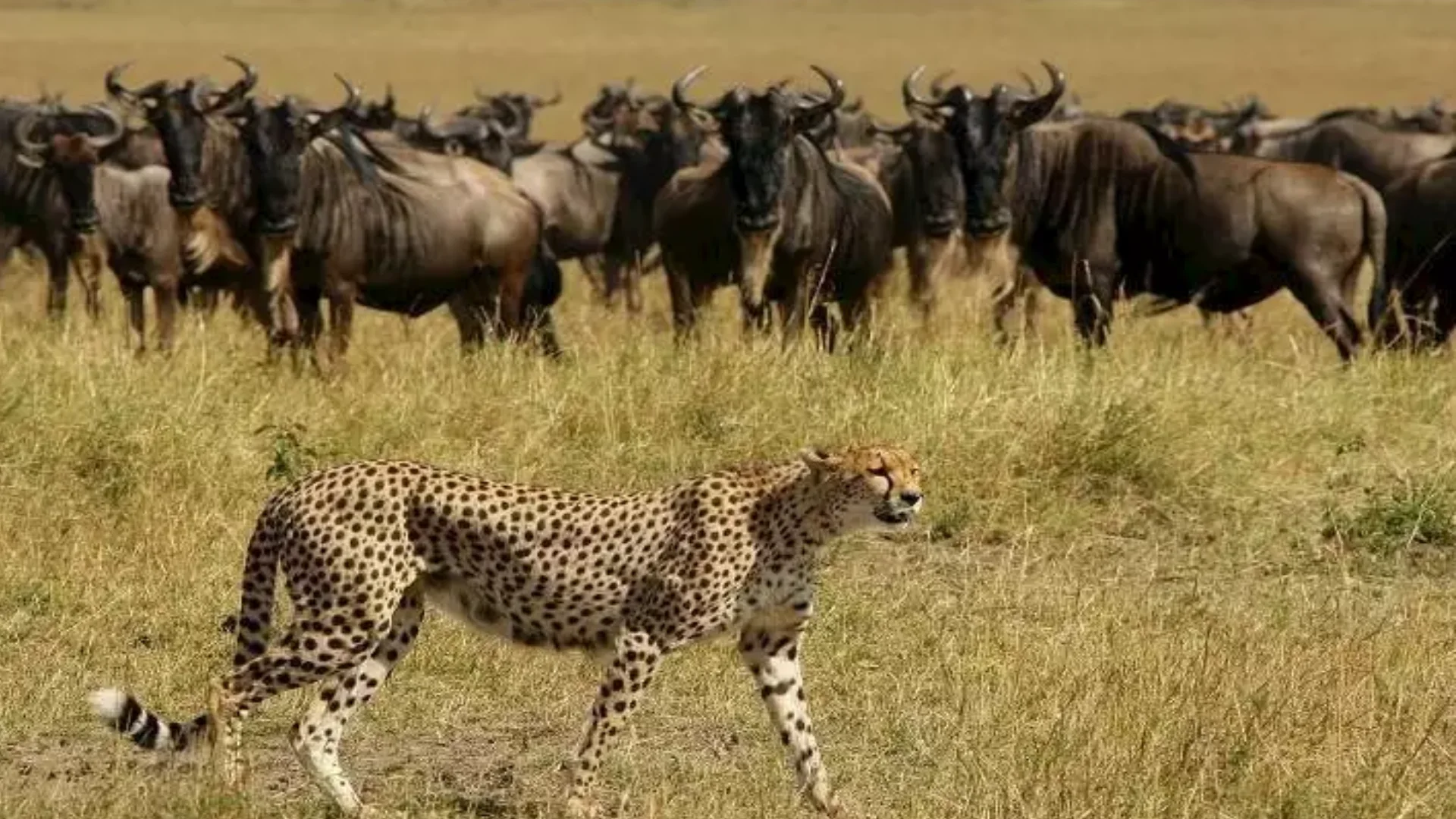
- Cheetahs need wide open plains to hunt, which makes the short-grass plains of the southern Serengeti and Ndutu especially important to them.
Smaller cats share these landscapes too: servals in long grass and wetlands, caracals in drier country, and African wildcats almost everywhere. Lions, leopards and cheetahs are all listed as Vulnerable on the IUCN Red List.
What big cats are up against
Tanzania’s protected areas are large, but big cats do not stay inside park boundaries. Most of the pressure on them comes from what happens at the edges.
- Losing space. As farms and settlements spread, the land between parks shrinks and populations become cut off from each other.
- Losing prey. Snaring and hunting for bushmeat remove the antelope and other animals that big cats depend on.
- Conflict with people. When a lion or leopard kills cattle or goats, the family that loses them pays the cost, and retaliation often follows.
- Illegal trade. Skins, bones and other body parts are still traded illegally.
None of these problems can be solved by protecting animals alone. They are solved, slowly, when the people who live closest to wildlife have good reasons and real support to keep it.
Where tourism fits in
Done well, tourism helps. Park and conservation fees pay for rangers and protection, and lodges, guides and suppliers create jobs for the communities that live beside protected areas. Done badly, tourism adds pressure: crowds of vehicles around a single cheetah, cars driving off-road where it is not allowed, a hunt interrupted for a photograph.
The difference comes down to the choices an operator makes, and the choices guests make with them.
How we watch big cats
Our team’s background is in conservation fieldwork in Tanzania, including research on human-wildlife conflict, the illegal wildlife trade and the role of ecotourism. That experience shapes the way we guide.
- Every safari is private. Your own vehicle and guide means no pressure to move on, and no pressure to push closer.
- Distance first. We keep a respectful distance, switch off the engine, keep voices low and never call, bait or follow an animal to provoke a reaction.
- Space at sightings. If a sighting is already crowded, we wait our turn or leave it, especially with cheetahs, which can abandon a hunt or their cubs when they are surrounded.
- Park rules, always. We stay on permitted tracks and respect the rules of every park and reserve.
- Patience over checklists. The best moments usually come to guests who stay with one family of lions for an hour rather than racing between sightings.
Beyond the park boundary
The future of Tanzania’s big cats depends as much on the villages around the parks as on the parks themselves. That is why our work reaches beyond the game drive. We work with Tanzanian conservation organisations whose projects include helping people and wildlife live alongside each other. We also work with communities in the Uvidunda Mountains, where local guides lead visits and part of the tourism income goes to village development.
For guests who want to go further, we plan conservation learning journeys: time with the people who study and protect Tanzania’s wildlife, and a clearer picture of what it takes to keep these animals in the wild.
A big cat safari that gives back
A conservation safari with us is still a safari: early starts, long sightings, comfortable lodges and camps, and a guide who knows where the cats are likely to be. What changes is how the trip is planned and where its benefits go.
- Choose the right season and place. For lions and cheetahs on open plains, join the 8-Day Wildebeest Calving Safari in Ndutu (about January to March), when the herds give birth and the predators follow, or the 8-Day Serengeti Wildebeest Migration Safari. For big prides and far fewer vehicles, look south to Ruaha National Park.
- Go out at the right times. Big cats are most active in the early morning and late afternoon, so the best game drives start at first light and end near sunset.
- Learn as you travel. Your guide explains what you are seeing: how a pride holds its territory, why cheetahs hunt by day while lions rest, and what each animal needs to survive outside the park.
- Add a day that gives back. Near Morogoro, guests can hike with local guides in the Uvidunda Mountains and plant native trees along the Msowero River with the community.
- Go deeper. Ask us about a conservation learning journey, built around time with the people who study and protect Tanzania’s wildlife.
Every safari is private and can be shaped around your interests, from photography to conservation. See all our Tanzania wildlife safaris, read how we approach responsible tourism, or message us on WhatsApp +255 622 191 154 to plan a big cat safari that gives back.
Ecolegacy Africa · Adventure That Gives Back
Recent Posts

Guest Experience from our Responsible Conservation Safari in Tanzania

Our Best Family Holiday Destinations in Tanzania